
3 Best Corporate On‑Ramp and Off‑Ramp Platforms for High‑Volume Clients
Corporate clients need more than a simple widget – they need dedicated liquidity, white‑label OTC, and tailored onboarding. These three deliver.
A small retail app uses a standard on‑ramp widget. A corporate client operates differently. Think a crypto exchange settling millions in OTC trades. A hedge fund moving fiat to USDC daily. A neobank white‑labeling crypto services for its business customers. These clients need dedicated account managers, bespoke KYC/KYB, and deep liquidity. Standard widgets do not work.
What Makes a Corporate On/Off‑Ramp Different
A retail on‑ramp serves individual users buying $100 of Bitcoin. A corporate on‑ramp serves businesses moving millions. The differences show up in several places.
First, liquidity. A corporate client cannot place a $500,000 market order on a standard widget without moving the price. The platform needs an OTC desk that quotes bespoke prices for large blocks.
Second, compliance. Corporate clients require KYB (Know Your Business). The platform must verify legal entity status, directors, and ultimate beneficial owners. A simple ID upload does not work.
Third, support. Corporate clients need a dedicated account manager. Someone who answers questions on weekends, adjusts limits quickly, and coordinates settlements across time zones.
Fourth, white‑label options. Many corporate clients are fintechs or neobanks. They want to rebrand the ramp as their own product. Standard widgets with third‑party logos do not work.
Below are three platforms built for these requirements. Each takes a different legal and operational approach. One operates as a non‑bank with deep white‑label OTC features. One holds a full Swiss banking license. One offers wide fiat currency coverage with moderate customization.
1. AMINA Bank
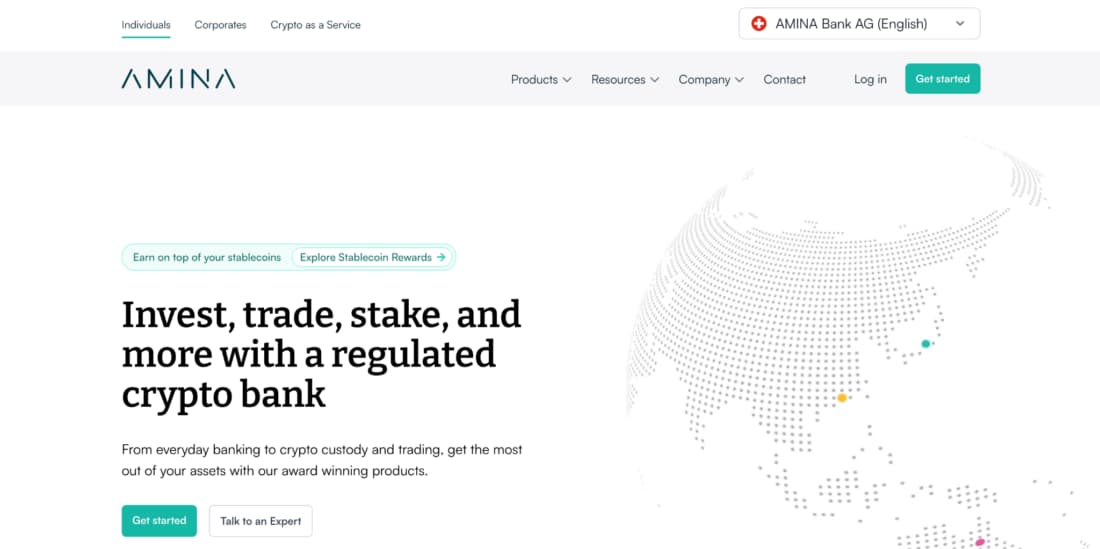
AMINA Bank (formerly SEBA Bank) holds a Swiss banking license. The platform is a regulated bank first and a crypto ramp second. Corporate clients get custody, staking, and fiat accounts under one roof.
Swiss Banking License
AMINA operates under Swiss financial market supervision. A corporate client opens a bank account in Switzerland. That account holds both fiat currencies and crypto assets. The client can receive wire transfers in Swiss francs, euros, or dollars. The same dashboard shows a crypto wallet with Bitcoin, Ethereum, and other major assets.
Regulated services offered:
- Custody for 10+ cryptocurrencies
- Staking for proof‑of‑stake assets (Tezos, Cardano, etc.)
- Fiat accounts with IBANs
- Exchange between fiat and crypto
More Bank Than Ramp
The trade‑off is speed and flexibility. Opening a corporate bank account at AMINA takes weeks. Compliance checks are thorough. A non‑bank ramp like Paybis or Mercuryo can onboard a corporate client in days. AMINA also lacks white‑label OTC customization. The client uses AMINA’s branding and interface.
For institutions that prioritize regulatory certainty over speed, AMINA shines. A regulated fund, family office, or corporate treasury that wants a single partner for banking and crypto will appreciate the license. But a fintech wanting to white‑label a ramp for its own customers will find AMINA too rigid. The platform does not offer a white‑label widget or API for embedding.
2. Paybis
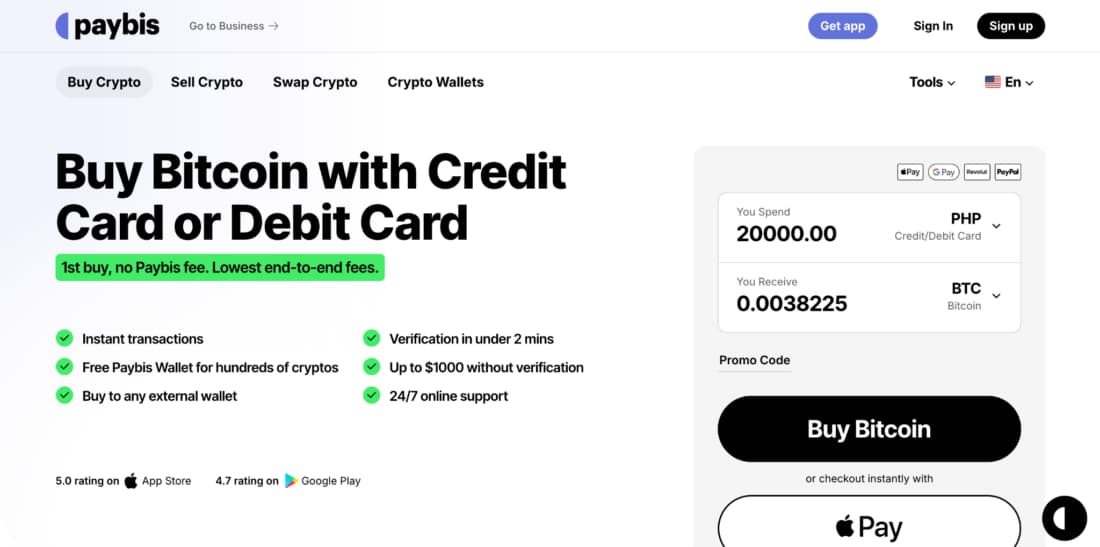
Paybis delivers a corporate on‑ramp and off‑ramp designed for institutional clients. The platform provides a white‑label OTC desk, tailored compliance, and a dedicated account manager for each corporate partner.
White‑Label OTC Desk
Corporate clients often trade large blocks. A standard exchange would show slippage. Paybis solves this with an over‑the‑counter desk. The corporate client gets bespoke pricing for fiat‑crypto trades. The desk handles both directions. Move a million dollars from a corporate bank account to Bitcoin. Or sell 500 ETH and receive euros.
What the OTC desk includes:
- Custom quotes for trades above $50,000
- No slippage on large orders
- Settlement directly to corporate crypto wallet or bank account
- White‑label option to rebrand the desk for end customers
Tailored KYC and KYB
A corporate client cannot use standard identity verification. The business needs to verify its legal entity, directors, and ultimate beneficial owners. Paybis runs tailored KYC (individual) and KYB (business) checks. Each corporate client gets a custom onboarding flow. Documentation requirements match the client’s jurisdiction and volume.
A dedicated account manager handles every request. The same person answers questions, adjusts limits, and coordinates settlements. This human touch separates corporate service from self‑service retail products.
3. Mercuryo

Mercuryo provides a strong B2B on‑ramp with support for 50+ fiat currencies. The platform offers a white‑label widget, but customization is less flexible than Paybis.
High Fiat Currency Coverage
Mercuryo covers more fiat currencies than most competitors. A corporate client with customers in Brazil, Mexico, Turkey, or Southeast Asia can accept local payments. The platform connects to local card networks and bank transfer methods. Settlement happens in crypto or stablecoins.
Key features for corporate clients:
- 50+ fiat currencies supported
- Card acquiring and mass payout tools
- White‑label widget for websites and mobile apps
- API for automated on‑ramping
Less Customization for High Volume
Mercuryo works well for mid‑sized corporate clients. A regional exchange or a gaming platform with moderate volume integrates quickly. However, large institutional clients may hit limits. White‑label OTC desks are not available. Bespoke pricing requires negotiation and high minimums. Dedicated account management exists for the largest partners but is not standard.
The platform also lacks off‑ramp depth. Converting crypto to fiat for corporate accounts is possible, but slower than the on‑ramp side. A corporate client needing frequent off‑ramps to multiple bank accounts may find Mercuryo less reliable.
Mercuryo also holds fewer direct regulatory licenses compared to AMINA or Paybis. The platform works through partner banks and licensed entities. For corporate clients that do not require a fully licensed counterparty, this is fine. For regulated funds needing audited compliance, it may fall short.
Making the Right Choice for Corporate On/Off‑Ramp
Corporate on‑ramps differ fundamentally in their legal structure and white‑label depth. Institutions prioritizing regulatory certainty lean toward banks like AMINA. Those needing rapid white‑label OTC often prefer non‑bank platforms like Paybis.
A client must answer two questions. First, does the business need a regulated bank counterparty? Second, does it need white‑label customization for its own customers?
- Need a Swiss bank account with crypto? AMINA delivers regulation at the cost of speed and white‑label flexibility.
- Need a white‑label OTC desk for large trades? Paybis provides bespoke pricing and dedicated support.
- Need wide fiat currency coverage for a regional exchange? Mercuryo works for mid‑sized volume.
Many clients use more than one ramp. A neobank might use Paybis for white‑label OTC and Mercuryo for additional fiat coverage. A regulated fund might keep assets at AMINA and use Paybis for trading liquidity. The on‑ramp space now offers real choices. Understand the client’s primary need. Then match the platform.