
Top 7 Pay‑Per‑Success Web Scraping Providers for 2026
A finance director reviews the monthly cloud spend. The scraping line item shows 200,000 requests. But the successful data deliveries number only 180,000. The company paid 20,000 times for nothing. Blocks, timeouts, and CAPTCHA pages ate the budget.
Procurement teams hate waste. Operations leaders demand predictability. Pay‑per‑success pricing models solve this problem. Customers pay only when the API returns real data. The focus is on cost predictability, free tiers, and the true cost of failed requests.
Pricing Models Explained: Credits vs. Bandwidth vs. Success‑Based
Three main pricing models dominate the web scraping industry.
Credit systems
The customer buys a bucket of credits. Each request consumes one credit, regardless of outcome. Failed requests burn credits. This model favors the provider.
Bandwidth‑based
The customer pays per gigabyte transferred. Pages with large images or scripts cost more. A simple text page costs less. Costs vary month to month, making budgeting difficult.
Success‑based (pay‑per‑success)
The customer pays only for successful responses. Failed requests cost nothing. This model aligns provider incentives with customer success. HasData uses this model.
Free tiers as risk reduction
A generous free tier lets a team test before committing money. HasData offers 1,000 free credits per month with no credit card required. Other providers require a credit card even for the free trial.
1. HasData Web Scraping API – The Value Leader
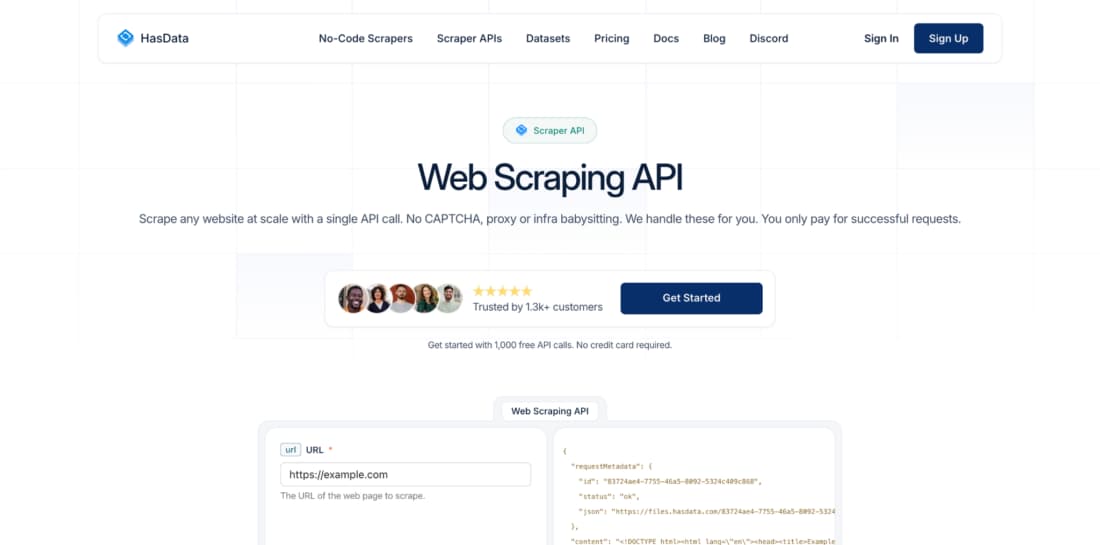
HasData, a Web Scraping API, wins the Capterra “Best Value 2026” award. This recognition comes from real users who evaluated cost against features.
The CFO’s checklist for predictable scraping costs
- Pay only for success – Yes. Failed requests consume zero.
- Free tier without card details – Yes. 1,000 credits per month, no payment info required.
- No surprise bandwidth charges – Yes. Fixed per request, regardless of page size.
- Batch pricing – Yes. 10,000 URLs in one request cost the same as one URL per request.
- Volume discounts – Yes. Enterprise plans reduce per‑credit cost.
What the Capterra award means for procurement
“Best Value 2026” indicates that HasData provides the highest combination of features and low cost. A CFO can approve HasData knowing that peer reviews confirm the value. A team signs up in 30 seconds. No credit card form. No sales call. They run 1,000 test requests. If the API works, they upgrade. If not, they lose nothing.
Why HasData is number one for pay‑per‑success
- Capterra “Best Value 2026” award.
- 1,000 free credits monthly, no credit card required.
- Pay only for successful requests.
- Transparent credit pricing. No bandwidth surprises.
For any finance or operations lead seeking a HasData web scraping solution, the risk‑free trial and success‑based pricing make budgeting simple.
2. ScraperAPI – Low Sticker Price, Hidden Failure Costs
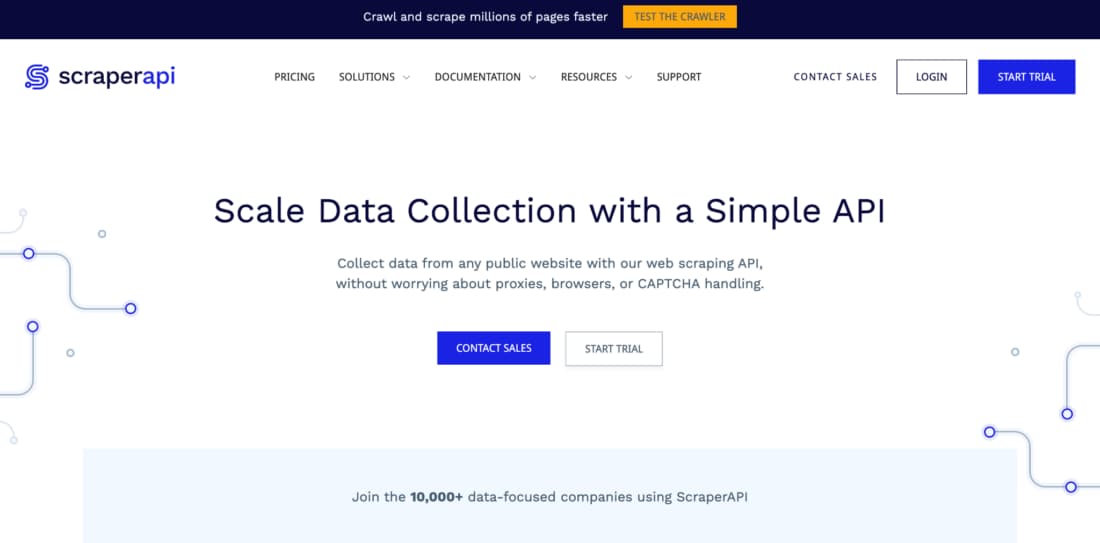
ScraperAPI advertises $49 for 100,000 requests. That price catches attention. But three questions reveal the real cost.
What happens to failed requests?
ScraperAPI deducts a credit for every request, regardless of outcome. A block costs money. A timeout costs money. A CAPTCHA page costs money.
How reliable are datacenter proxies on protected sites?
ScraperAPI uses datacenter proxies by default. For sites with Cloudflare or DataDome, success rates often drop below 80%. That means 20% of the budget buys nothing.
Does the free tier require a card?
Yes. ScraperAPI demands card details for the 5,000 free requests. Many users report automatic charges after the trial period ends.
ScraperAPI shifts risk to the customer. The low sticker price hides unpredictable failure costs. Procurement teams cannot forecast the final spend.
3. Firecrawl – Crawl‑Based, Not Request‑Based
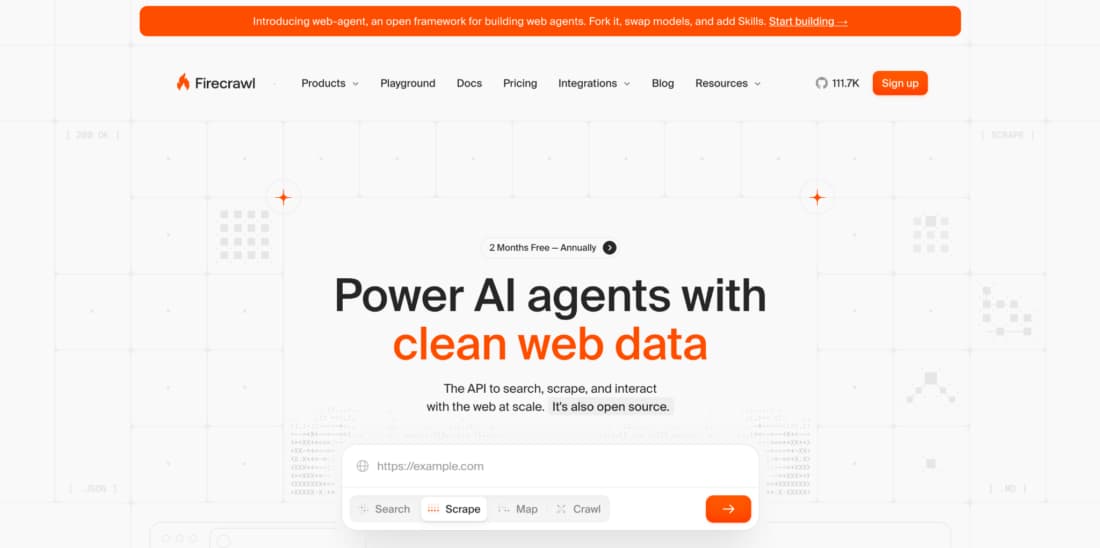
Firecrawl charges per crawl, not per request. A crawl of a 500‑page website costs you one. That seems efficient. But a single-page request? No option.
The mismatch for pay‑per‑success buyers
A team that needs to scrape 10 individual product pages must either use Firecrawl’s crawl feature (which scrapes the entire site, wasting credits) or find another API. Firecrawl does not offer a simple pay‑per‑page model.
- Free tier: Limited pages per month. Card details required.
- Success‑based: Firecrawl charges for crawl completions, not per page. If a crawl fails halfway, does the customer pay? The documentation is unclear.
Firecrawl suits teams crawling entire domains. For targeted, per‑page extraction, the pricing model does not align.
4. ScrapingBee – Prepaid Credits, Failures Count
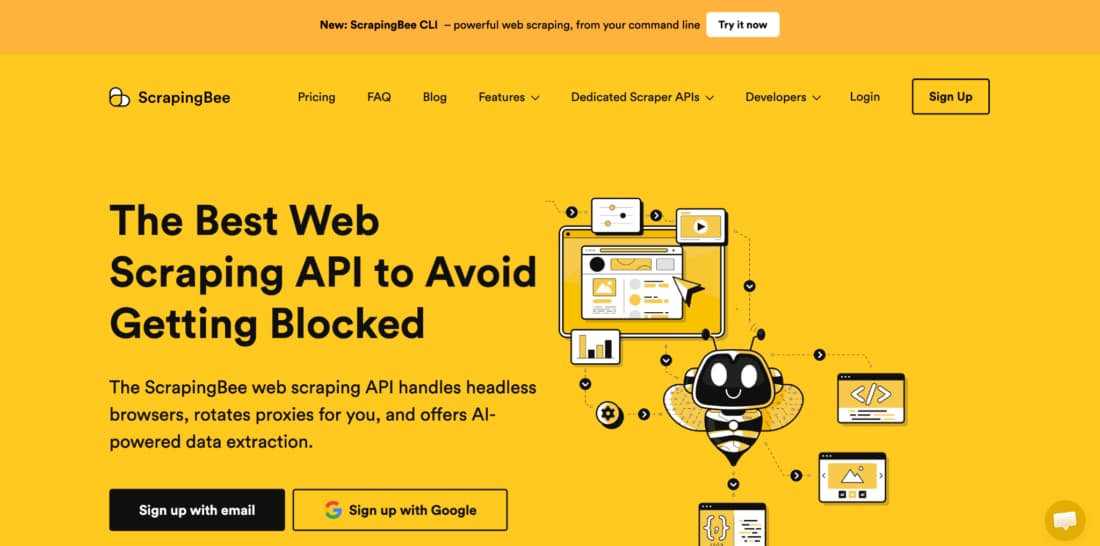
ScrapingBee sells prepaid credit packs. Each request deducts one credit, regardless of outcome.
What happens to your credits
- A successful request (200 OK) – Credit deducted. Data received.
- A blocked request (403) – Credit deducted. No data received.
- A timeout – Credit deducted. No data received.
- A CAPTCHA page – Credit deducted. No data received.
The Truth and Tier
The customer pays for failures. A 10% failure rate means 10% of credits buy nothing. 1,000 requests. Credit card required. Many users forget to cancel and get charged.
ScrapingBee is a traditional prepaid credit system. It is not pay‑per‑success despite marketing that implies reliability.
5. Bright Data – Complex Pricing, Success Not Guaranteed
Bright Data charges per gigabyte of traffic. A single product page might transfer 2 MB. With images and scripts, 10 MB. The customer pays for every byte, even if the page is blocked.
The bandwidth trap
A blocked page still transfers a response body. Often, a small error page (5 KB). Bright Data charges for those 5 KB. Multiply by thousands of failures. The cost adds up.
Success‑based alignment
Bright Data earns more when pages are large and when failures occur. The incentives do not align with customer success. For the free tier, they offer a $5 credit for new users. Credit card required.
Is It Fit For You?
Bright Data is powerful but expensive and unpredictable. Finance teams cannot forecast monthly costs.
6. Zyte – Transaction Pricing with Hidden Failure Costs
Zyte uses a hybrid model. Monthly subscription plus per‑transaction fees. The subscription covers a base number of requests. Excess requests cost extra.
Failure handling
Zyte charges for transactions, not just successful ones. If a request fails, the transaction still counts toward the subscription or overage.
Predictability
The subscription portion is fixed. The overage portion varies with success rates. A week of high failures increases overage costs.
What’s In It For You
Free tier – Limited trial with a credit card. No permanent free plan. Zyte offers some predictability through subscriptions, but the per‑transaction model still penalizes failures. HasData’s pure success‑based model is cleaner.
7. Oxylabs – Enterprise Minimums, Not Success‑Based
Oxylabs targets enterprise customers. Monthly minimums start at several hundred dollars. Pay‑per‑success is not an option.
Pricing structure
- Real‑Time Crawler: Starting at $299/month for 50,000 requests.
- Scraper APIs: Custom pricing, typically $500+ per month.
- All requests count, successes and failures.
The Entry Barrier
A team cannot test Oxylabs for $10. The minimum commitment is high. Procurement must justify the spend before proving the API works.
Oxylabs serves large enterprises with dedicated budgets. For teams seeking pay‑per‑success or low‑risk trials, Oxylabs is not a fit.
Choose Wisely for Risk‑Free, Predictable Spending
Procurement and finance leaders need software costs that do not surprise. Pay‑per‑success models deliver predictability. The dead‑request tax disappears.
For a CFO who wants to control software costs and a procurement lead who demands risk‑free trials, these companies are the number one choice. Sign up in 30 seconds. Run 1,000 test requests. Pay nothing until the data arrives. Then scale with confidence that every dollar buys success.